"Television is dead." This from a manager at work. His explanation, which I've heard a few times before, was that his house doesn't even have a working TV anymore. Everyone at his house watches everything online and on their own personal phone or tablet.
Each time I hear this, I can't help but wonder if he realizes the bubble he lives in when he says that TV-is-dead as fact. Or more honestly, I wonder if he realizes how different his bubble is from my bubble - which is again different from the bubble of my former neighbors, many of who live paycheck-to-paycheck.
My bubble still exists in a world where TV comes free over the air with commercials. In the internet-limited world where I live, data caps are a fact of life and streaming is an expensive reality only. I will suggest my bubble is more transparent than my manager's.
Current estimates are that the percentage of households without a TV are in the low single digits. Percentages of households with limited access to true high speed data access is around 15% - and those who can't afford high speed access adds up to an additional 10%. The bubble for people like me is larger than the bubble for people like my manager's.
My point here isn't to proudly thump my chest and point out that I, voluntarily or involuntarily, live the life of a semi-Luddite. But it is to point out that the reality any one person sees every day doesn't match the reality of the overall population - even in first world countries. And it is both sad and dangerous when people look at their own situation and translate that broadly. When a manager at work does this, it helps me understand why many bad decisions get made.
But the bubble that I live in, or my manager lives in, or anyone else lives in isn't really the bubble I'm talking about.
I grew up smack dab in the middle of Generation X. We had one - yes 1 - TV in the house which we all shared. This reality was not abnormal, and it meant that we collectively had to decide what we were going to watch on TV. Or if we didn't want to watch what was on TV, we had to do something else. I'm not writing about this as a way to wax poetically about how much better things were. It didn't always seem that good, but there were negotiation skills to be learned in how to deal with a limited resource (the TV). There were skills to be learned in dealing with not always getting what one wanted. And it wasn't just the TV. We had a computer, a Franklin Ace 2000, earlier than many people, but it was shared as well. And as a tool primarily for education, its use was extremely limited.
There were somewhat more affluent friends who had more than one TV, but it was at most two, and often that second TV would be in the parent's bedroom; it was definitely not for kids (and friends) daily TV watching. Even in those wealthier houses, TV was often controlled by older siblings. There were arguments about what to watch and dealing with not always getting what one wanted - it was just a fact of life. Once VCR's became popular, similar issues came up with what movies to rent and watch. (of course in the 1980's, MTV was almost always ubiquitously on).
Thinking back, I was in college before I had "my own" TV and had bought a house before I had "my own" PC.
Somewhere around the early 2000's, when PC's were still normal, folders started to show up courtesy of Microsoft labeled "My Pictures" or "My Music" or "My ..." This seemed like an narcissistic step change. I don't blame Microsoft for this, it was one of the early waves in the tsunami of My, Me, I.
"TV is dead. All screen time done in my house is on our personal iPads and phones." No more learning to deal with siblings and friends. No more accepting that we won't always get our way. My Facebook feed is for me and me alone. I can scream about how I am the center of the universe on Twitter. I don't like what happens to be on the car radio at this second - no problem, I'll just tune out with my iPhone. There are life skills that will be talked about in the same way horse and buggies are talked about - historic, anachronistic, practiced only by the Atavists or odd religious sects.
We are now moving to where people are growing up in a bubble of 1.
We are now moving to where people will live in a bubble of 1.
At least until forced to interact - whether at work or driving on the road or as neighbors - dealing with others as part of society may need to be figured out much later in life. If at all. Lessons can be unlearned as the claustrophobic bubble tightens around us into adulthood. I'm not trying to overstate the importance of watching TV or streaming Netflix or Hulu. Watching TV is merely bubble gum for the eyes. But these are just one example of a individualized-everything world - where my wants take precedent over everyone else's wants (and needs).
I realize I sound like a finger-wagging grandfather here. But I believe this reality is just beginning to take shape. Maybe I am a finger-wagging old fart.
So if we have an increasingly large society built of an unlimited number of individual bubbles, there will remain another decreasing segment of society who still learn the life skills of living in larger groups - the people who choose not to, or are forced to choose not to by geography and/or income level. If all generations up through GenX grew up understanding a world of have vs. have-nots - we may be building to a future of My vs. Our; Me vs. We. It certainly seems like the latter would be better for all.
I don't see anything reversing this trend. And maybe it could be better. Already the post-millennial generation is being called iGen; that is telling. Aldous Huxley wrote, "Any change is a menace to stability." and this change seems to be happening under the untested belief that it will be better. Well, better for "Me" anyway.
Showing posts with label Work. Show all posts
Showing posts with label Work. Show all posts
Saturday, February 3, 2018

Friday, December 15, 2017
The Politics of the Office Gift Exchange
Several years ago there was there was a Christmas white elephant gift exchange in the department I was working in at the time. I had a spare copy of Quentin Tarantino's Reservoir Dogs and thought about using that. I didn't but wish I would have.
"Tasteful, useable(sic) gifts please."
I've never worked anywhere that had a secret santa gift exchange, and I'm very glad about that. I would probably opt to not participate in that. The pitfalls associated with secret Santas are just too awful to contemplate.
But opting out of office social theatrics can be just as dangerous as participation. A dentist visit may be wiser. Or quitting.
Most places I've worked, outside of the ones that do thankfully nothing, have a white elephant gift exchange. These can be humorous as various rules during the actual exchange mean highly desirable gifts are exchanged and sought after. Sometimes what is sought after is inexplicable.
Where I currently work, the suggestion is for something between $5 and $10. Several political phenomena can be observed:
This year I gave Duke's Original Recipe Smoked Sausage. Smack dap in the middle of the price range at just over $7. As food, it isn't something that will have to stick around too long. My only hope was that the office vegan would somehow end up with it. The horror. The horror. Never get out of the boat.
 "Never apologize. Never explain." - Hunter S Thompson
The most sought after items were a couple bottles of wine that must have been determined to be better than average. The Big Spender's large box of craft beers were also sought after with vigor.
I ended up with two utility lighters. These have some usefulness, but I already have two of them. I may now have a lifetime supply of them - although the igniters typically give out long before the butane is exhausted.

"Tasteful, useable(sic) gifts please."
I've never worked anywhere that had a secret santa gift exchange, and I'm very glad about that. I would probably opt to not participate in that. The pitfalls associated with secret Santas are just too awful to contemplate.
But opting out of office social theatrics can be just as dangerous as participation. A dentist visit may be wiser. Or quitting.
Most places I've worked, outside of the ones that do thankfully nothing, have a white elephant gift exchange. These can be humorous as various rules during the actual exchange mean highly desirable gifts are exchanged and sought after. Sometimes what is sought after is inexplicable.
Where I currently work, the suggestion is for something between $5 and $10. Several political phenomena can be observed:
- The bottle of wine - everybody wants it, if only to dull the pain. But nobody can look too much like they want it, lest they be labeled the office lush.
- The regift - I recall an amaryllis given one year where, on opening the box, the recipient pulled out a plant that had sprouted and grown in complete darkness. Living its whole life without light, it looked like a cave fish - giving away the fact that it was a year old.
- The big spender - the gift obviously over the suggested amount, where the giver doesn't want to be revealed but really does want to be known.
- The cheap spender - post-it notes and office pens. Is that theft?
- The last minuter - something ... anything from the gas station on the way into the office in the morning.
- The home made present - often thoughtful, but almost too personal for work. And the last thing most of us need is more stuff to sit on a shelf.
This year I gave Duke's Original Recipe Smoked Sausage. Smack dap in the middle of the price range at just over $7. As food, it isn't something that will have to stick around too long. My only hope was that the office vegan would somehow end up with it. The horror. The horror. Never get out of the boat.

The most sought after items were a couple bottles of wine that must have been determined to be better than average. The Big Spender's large box of craft beers were also sought after with vigor.
I ended up with two utility lighters. These have some usefulness, but I already have two of them. I may now have a lifetime supply of them - although the igniters typically give out long before the butane is exhausted.

As it turned out, the Big Spender opened the package of sausages. The face she made was not very pleasant. I didn't follow the movement to know if she ended up with it or not.
The highest level manager at the soiree announced his intention to leave his gift as "tip for the wait staff." I contemplated how that may be perceived by the person who brought that one in.
I suppose the politics follow the receiver as well as the giver.
The highest level manager at the soiree announced his intention to leave his gift as "tip for the wait staff." I contemplated how that may be perceived by the person who brought that one in.
I suppose the politics follow the receiver as well as the giver.
Saturday, October 7, 2017
The Art of Demotivation - In Practice
Everyone has done it. Parents to children. Coworkers to colleagues. Friends to eachother.
Everyone has occasionally called someone by the wrong name or briefly failed to recall the name of the person they are looking at. I'll admit to being terrible with names of people I've newly met.
But it felt more nefarious when a manager at work called me by another name recently.
This will be the second consecutive post which relates to work - and I don't write about work.
I'm in a position which is both enviable and worthy of sympathy. My management at work doesn't really care about my role. They've made that abundantly clear by ignoring an increasing percentage of stuff related to what I'm working on in the nearly two years since I moved into my current job. There are still some check-the-box HR exercises and I still talk with them, but my job is largely a bottomless void. Bottomless void also implies that something rolls downhill - and it does.
This is enviable since it means they largely leave me alone. This is worthy of sympathy since it means I'm quite sure I'm superfluous. Or perhaps more realistically, I'm doing work which needs to get done - and the best possible outcome from a management perspective is nobody hears about it. I may be a hairs breath away from being ignored right out of a paycheck.
I sometimes wonder if I may be slipping into the nothingness described in Harlan Ellison's short story "Are You Listening?" It describes a man so mundane and average that he loses his existance - until he meets another man of the same fate. Maybe there are other people at work who nobody has seen for years, but continue to dutifully show up every day.
David Bolchover writes about this in his book The Living Dead: Switched Off, Zoned Out. Mr. Bolchover was employed for years, where he freely admits he was doing almost nothing. He relates that he was largely forgotten about. There is another distinct possibility in that his management may have thought it was easier to give Mr. Bolchover unlimited freedom and a paycheck, rather than deal with his situation. One thing I've learned over the years is that management really are human, and with the same limited energy to deal with difficult situations as everyone else. If something isn't an immediate problem, ignoring it until it either becomes one or goes away may be a viable strategy - even if a feeble one. A third possibility is that Mr. Bolchover could be a painful person to work with. I've never met him and know nothing about him. But I've seen difficult people be sidelined with roles that basically separate them from the normal population. The corporate equivalent to solitary confinement.
Regardless, his point is a real one. How much of the work going on is critically important? It is too easy for the tasks to expand to fill the time, rather than the time being well used at the work that needs to be done.
I have stuff to do. I'm competent at most of it, good at some of it. But the overall management sentiment seems to be one of ambivelance.
I don't read many work/management books, but in addition to Bolchover's The Living Dead and Fisman and Sullivan's The Org (a highly recommended book which helps explains why large organizations devolve into the same painful, gelatinous mass), I read E.L. Kersten's The Art of Demotivation with great interest.
I'm really not sure how to classify The Art of Demotivation. The book explains how to get more out of employees by demotivating them to a level somewhere just above the ground snail. I'd like to believe Kersten's The Art of Demotivation is a completely satirical look at the pop culture of management books, celebrity business people, and self-help about how to "do more with less" as a manager. But I can't. I have seen far too many of Mr. Kersten's techniques practiced at work and far too often. Sadly, I suspect many of the proletariat in a global corporation could say this. So while it may not be a serious how-to book for up-and-coming managers, it may be a third person how-I-got-here for too many managers.
One of the strategies Mr. Kersten suggests in a couple of different places in the book is to "forget" the names of subordinates - and to do this frequently. Employing this strategy, he even demonstrates this gem in the Acknowlegements:
"I also need to give credit to my research assistants Robert (or Roger?) from Massachusetts and the redhead with the eyebrow piercing. They tracked down numerous references, checked the accuracy of quotations, and were a constant source of inspiration. Naturally, any errors and omissions in the final manuscript are their fault."
So given the current ambivalent demotivation at work, when my manager called me the wrong name, in writing, I raised an eyebrow. He has known me for well over five years. We've worked close enough in the past that we've nearly come to fisticuffs (slight exageration). Making it worse, he called me by the name of a colleague who is leaving the organization. And his subsequent follow through was nearly delayed enough to be irrelevant with silence since.
But I won't complain. In a training earlier this year, the speaker, who is both interesting to listen to and the rare individual who is actually motivating, said that he wanted, "...the most important project that is not on management's radar." I'm definitely not there, but I can still revel in being left alone.
Everyone has occasionally called someone by the wrong name or briefly failed to recall the name of the person they are looking at. I'll admit to being terrible with names of people I've newly met.
But it felt more nefarious when a manager at work called me by another name recently.
This will be the second consecutive post which relates to work - and I don't write about work.
I'm in a position which is both enviable and worthy of sympathy. My management at work doesn't really care about my role. They've made that abundantly clear by ignoring an increasing percentage of stuff related to what I'm working on in the nearly two years since I moved into my current job. There are still some check-the-box HR exercises and I still talk with them, but my job is largely a bottomless void. Bottomless void also implies that something rolls downhill - and it does.
This is enviable since it means they largely leave me alone. This is worthy of sympathy since it means I'm quite sure I'm superfluous. Or perhaps more realistically, I'm doing work which needs to get done - and the best possible outcome from a management perspective is nobody hears about it. I may be a hairs breath away from being ignored right out of a paycheck.
I sometimes wonder if I may be slipping into the nothingness described in Harlan Ellison's short story "Are You Listening?" It describes a man so mundane and average that he loses his existance - until he meets another man of the same fate. Maybe there are other people at work who nobody has seen for years, but continue to dutifully show up every day.
David Bolchover writes about this in his book The Living Dead: Switched Off, Zoned Out. Mr. Bolchover was employed for years, where he freely admits he was doing almost nothing. He relates that he was largely forgotten about. There is another distinct possibility in that his management may have thought it was easier to give Mr. Bolchover unlimited freedom and a paycheck, rather than deal with his situation. One thing I've learned over the years is that management really are human, and with the same limited energy to deal with difficult situations as everyone else. If something isn't an immediate problem, ignoring it until it either becomes one or goes away may be a viable strategy - even if a feeble one. A third possibility is that Mr. Bolchover could be a painful person to work with. I've never met him and know nothing about him. But I've seen difficult people be sidelined with roles that basically separate them from the normal population. The corporate equivalent to solitary confinement.
Regardless, his point is a real one. How much of the work going on is critically important? It is too easy for the tasks to expand to fill the time, rather than the time being well used at the work that needs to be done.
I have stuff to do. I'm competent at most of it, good at some of it. But the overall management sentiment seems to be one of ambivelance.
I don't read many work/management books, but in addition to Bolchover's The Living Dead and Fisman and Sullivan's The Org (a highly recommended book which helps explains why large organizations devolve into the same painful, gelatinous mass), I read E.L. Kersten's The Art of Demotivation with great interest.
I'm really not sure how to classify The Art of Demotivation. The book explains how to get more out of employees by demotivating them to a level somewhere just above the ground snail. I'd like to believe Kersten's The Art of Demotivation is a completely satirical look at the pop culture of management books, celebrity business people, and self-help about how to "do more with less" as a manager. But I can't. I have seen far too many of Mr. Kersten's techniques practiced at work and far too often. Sadly, I suspect many of the proletariat in a global corporation could say this. So while it may not be a serious how-to book for up-and-coming managers, it may be a third person how-I-got-here for too many managers.
One of the strategies Mr. Kersten suggests in a couple of different places in the book is to "forget" the names of subordinates - and to do this frequently. Employing this strategy, he even demonstrates this gem in the Acknowlegements:
"I also need to give credit to my research assistants Robert (or Roger?) from Massachusetts and the redhead with the eyebrow piercing. They tracked down numerous references, checked the accuracy of quotations, and were a constant source of inspiration. Naturally, any errors and omissions in the final manuscript are their fault."
So given the current ambivalent demotivation at work, when my manager called me the wrong name, in writing, I raised an eyebrow. He has known me for well over five years. We've worked close enough in the past that we've nearly come to fisticuffs (slight exageration). Making it worse, he called me by the name of a colleague who is leaving the organization. And his subsequent follow through was nearly delayed enough to be irrelevant with silence since.
But I won't complain. In a training earlier this year, the speaker, who is both interesting to listen to and the rare individual who is actually motivating, said that he wanted, "...the most important project that is not on management's radar." I'm definitely not there, but I can still revel in being left alone.
Saturday, September 30, 2017
Work Social Functions
My work had a half day social function at a local brew-pub where everyone was "strongly encouraged" to go. I did not go.
I seem to be infected with some idiopathic melancholy torpor recently. I guess that is a very verbose way of saying that I haven't been in the best of moods and for no reason. I will chalk this up to nothing more than the ebb and flow of Midlife Malaise; likely just a local minima that will be gotten over quickly, or certainly no later than vacation which isn't too far off.
I'm not sure that hindsight brings clarity, or if it just brings a new wrong perspective, but I tried to think back on which years were overall good and which were overall bad. That kind of binary categorization is impossible, so I created an arbitrary scale to do this.
I started it in high school - as the floor for how bad things could be. There are many situations that could be worse than high school, but it still represents some kind of sub-basement for mental well-being.

There is a lot of noise in any given year, with some highs and some lows, but college was definitely a high point - potentially even artificially so. Constantly on the steep side of the learning curve. Always busy - trying to work and go to school full-time. A lot of interesting friendships, even if some of them were short-lived and/or alcohol fueled. No public shaming due to wearing the wrong shoes. Even college-poverty wasn't too bad since there was a group catharsis in not having any money.
Graduation brought a somewhat painful job search, and eventual employment in a vocation relevant to my degree. While this should have been even better than college, I was hired into a really, really bad situation. "Oh, what have I gotten myself into."
I wasn't sure full employment could have gotten worse while still drawing a paycheck, but it did. At this point, the fish started to finally see the water he was swimming in...

A change to a new job brought renewed hope that college wasn't wasted and was almost certainly worth the time, energy and money that went into it.
Things progressed along until the onset of Midlife Malaise. Is this really it? Thankfully, this drop in mental well-being isn't continuously permanant.
But this exercise does bring up an interesting point. When talking about the midlife crisis, experts usually show a "U-Curve" with a minimum for life satisfaction somewhere around the late 40's to early 50's. This may be right in aggregate, but for any one individual, there is a lot of noise - with life positives along with the negatives. I suppose some of these can even happen simultaneously. The low in the "U" may actually represent the depth and frequency of the low points in the noise.

More malaise can bring things down when it lasts beyond a certain amount of time. The new house has overall been an improvement but was somewhat offset by the painful selling of the old house. I sometimes wonder if I'm destined to live next to noisy people, or if everywhere just has noisy people?
I'm not sure if I'll still think this when I look back in a few years, but the last couple years have been fine. Not great, but not bad either.
Still, adult life can get pretty monotonous.
While I would like to believe that life's dizzying highs and crushing lows appear to be smoothing out as I get older, it is probably dangerous to think that. Involuntarily losing my job or being put in prison would probably be a new crushing low. A financial windfall or falling ass-backwards into a perfect job could be a new dizzying high. Outside of something like that, it does appear that life's highs and lows are smoothing out as I get older - and maybe that is where the midlife malaise begins to taper off. Maybe.
Instead of going to the work social outing at the brew-pub, I sat forlornly at my desk and kept busy. It isn't that my workload is so heinous that I couldn't afford the time to go, I just didn't want to, and I'm approaching a place in my life where that sometimes takes precedence. Far too often, I have ended up trapped at these types of work functions talking with someone I really did not want to talk to or talking about a subject I really don't have any interest in talking about - sometimes both. The conversations that I may want to have are nearly impossible with the threat of management around every corner; standing around without anything relevant to say is a near certainty.
The situation can also be very similar to the grocery store where I run into a casual acquaintance. After the requisite banal pleasantries, we both return to picking out onions and mangos, inspecting them intently to avoid eye contact again - only to run into this same person in the potato chip aisle. And the frozen food aisle... When it happens the third time, I almost want to confront the situation and scream, "Look, one of us is going to have to finish grocery shopping another day because this continued interaction is just getting terrible for both of us." Throw in enough brew-pub alcohol to be annoying, without enough for sufficient social lubrication and these things can just get painful.
While my life has no shortage of awkward interactions, I just don't see the need to purposefully put myself in those situations. Yes, I'd rather just stay at work.
I seem to be infected with some idiopathic melancholy torpor recently. I guess that is a very verbose way of saying that I haven't been in the best of moods and for no reason. I will chalk this up to nothing more than the ebb and flow of Midlife Malaise; likely just a local minima that will be gotten over quickly, or certainly no later than vacation which isn't too far off.
I'm not sure that hindsight brings clarity, or if it just brings a new wrong perspective, but I tried to think back on which years were overall good and which were overall bad. That kind of binary categorization is impossible, so I created an arbitrary scale to do this.
I started it in high school - as the floor for how bad things could be. There are many situations that could be worse than high school, but it still represents some kind of sub-basement for mental well-being.

There is a lot of noise in any given year, with some highs and some lows, but college was definitely a high point - potentially even artificially so. Constantly on the steep side of the learning curve. Always busy - trying to work and go to school full-time. A lot of interesting friendships, even if some of them were short-lived and/or alcohol fueled. No public shaming due to wearing the wrong shoes. Even college-poverty wasn't too bad since there was a group catharsis in not having any money.
Graduation brought a somewhat painful job search, and eventual employment in a vocation relevant to my degree. While this should have been even better than college, I was hired into a really, really bad situation. "Oh, what have I gotten myself into."
I wasn't sure full employment could have gotten worse while still drawing a paycheck, but it did. At this point, the fish started to finally see the water he was swimming in...

A change to a new job brought renewed hope that college wasn't wasted and was almost certainly worth the time, energy and money that went into it.
Things progressed along until the onset of Midlife Malaise. Is this really it? Thankfully, this drop in mental well-being isn't continuously permanant.
But this exercise does bring up an interesting point. When talking about the midlife crisis, experts usually show a "U-Curve" with a minimum for life satisfaction somewhere around the late 40's to early 50's. This may be right in aggregate, but for any one individual, there is a lot of noise - with life positives along with the negatives. I suppose some of these can even happen simultaneously. The low in the "U" may actually represent the depth and frequency of the low points in the noise.

More malaise can bring things down when it lasts beyond a certain amount of time. The new house has overall been an improvement but was somewhat offset by the painful selling of the old house. I sometimes wonder if I'm destined to live next to noisy people, or if everywhere just has noisy people?
I'm not sure if I'll still think this when I look back in a few years, but the last couple years have been fine. Not great, but not bad either.
Still, adult life can get pretty monotonous.
While I would like to believe that life's dizzying highs and crushing lows appear to be smoothing out as I get older, it is probably dangerous to think that. Involuntarily losing my job or being put in prison would probably be a new crushing low. A financial windfall or falling ass-backwards into a perfect job could be a new dizzying high. Outside of something like that, it does appear that life's highs and lows are smoothing out as I get older - and maybe that is where the midlife malaise begins to taper off. Maybe.
Instead of going to the work social outing at the brew-pub, I sat forlornly at my desk and kept busy. It isn't that my workload is so heinous that I couldn't afford the time to go, I just didn't want to, and I'm approaching a place in my life where that sometimes takes precedence. Far too often, I have ended up trapped at these types of work functions talking with someone I really did not want to talk to or talking about a subject I really don't have any interest in talking about - sometimes both. The conversations that I may want to have are nearly impossible with the threat of management around every corner; standing around without anything relevant to say is a near certainty.
The situation can also be very similar to the grocery store where I run into a casual acquaintance. After the requisite banal pleasantries, we both return to picking out onions and mangos, inspecting them intently to avoid eye contact again - only to run into this same person in the potato chip aisle. And the frozen food aisle... When it happens the third time, I almost want to confront the situation and scream, "Look, one of us is going to have to finish grocery shopping another day because this continued interaction is just getting terrible for both of us." Throw in enough brew-pub alcohol to be annoying, without enough for sufficient social lubrication and these things can just get painful.
While my life has no shortage of awkward interactions, I just don't see the need to purposefully put myself in those situations. Yes, I'd rather just stay at work.
Sunday, June 18, 2017
Time Marches Deliberately On
Astronomical summer doesn't start for another few days, but it seems like summer is already half over.
I'm far enough away from school that I should no longer dwell on these things, but the whole concept of "summer" remains something I think about often. Ignoring the first few years of life which are replete with childhood amnesia, early life is discreetly compartmentalized. Agreeably so. I don't know that this is good or bad - more than likely it is neither, and just what becomes the norm.
Each of those first years is broken into first semester, second semester and summer. This pattern is offset from the calendar year, almost certainly since a previous agrarian time has the growing season offset from the calendar year. School was secondary to the income and food when much of the population had to take advantage of what can be done spring through fall. The fiscal year practiced by many businesses is more nebulous and doesn't count as the same, or similar thing, since it only exists on a handful of accountants' spreadsheets and can be any to-from date that a company chooses.
And so for some 20ish years, life is broken into three loosely detached sections, with summer being the most important. It was with a harsh reality that I realized that after graduating college, the time dimension became much longer. No more starting a new school year in September. No more mending with a second semester after Christmas break. No more throwing away the previous school year's notes, to summer's heat and humidity. Once hired after college, the next transition looked like it would be...
I'm doing some body work on one of my cars right now. The last time I've done any body work was about 20 years ago (on the same vehicle). I've lost some of the skill required to do body work in the last 20 years, which means each step has been done very deliberately and only after thinking about it; the thinking has taken more time than the doing for some steps. The deliberate work may also be influenced by by being in my mid-40's. I think I was 26 when I last painted this car. I don't remember 26 as well as I remember college. Likely 26 may have been far enough into work life to already have some introduction to the monotony that was to get older. Instead of years being broken into first semester, second semester and summer, days are broken into work, eat, sleep (repeat).
I'm both enjoying the body work on the car and being intimidated by it. Cars are a hobby and nearly everything is fixable in body work short of a welding fire that sends the car into a molten inferno. But my body work skills even in my mid 20's were adequate at best.
I'm compelled to get the car done with enough time to put at least a few miles on it yet this year. To do that, my deliberate pace must continue deliberately progressing forward.
My Dad died two years ago on Father's Day. Two years isn't that long - only a few percent of my life - but it doesn't seem possible that it has already been two years. Time on the small scale can often drag on, slowly and deliberately. Stepping back away from the immediate, time on the large scale accelerates toward the infinite.
My summer started with reading The Last Lecture by Randy Rausch - both he and my Dad died of pancreatic cancer. Have big dreams, Randy Rausch says. Bronnie Ware tells us to fulfill at least some of our dreams. And yet, experience is what you get when you don't get what you want says Randy Rausch.
I have, or had, plans on visiting a tourist farm later this summer. It is only a few hours away, and I could probably do it in one long day; although two days is more likely. These plans keep getting moved back. I've got the car's body work to plug away on. I have a fall hunt that I need to maintain my fitness and rifle skills for. I can't travel around Memorial Day or around Independence Day - too many other people travel during these times. I'm making plans for the August eclipse. The lawn needs to be mowed every once in a while.
As a result, my short adventure plans appear to be perpetually in the future. Time marches deliberately on.
Astronomical summer doesn't start for another few days, but it seems like summer is already half over.
"...because down in my gut, I wanted nothing more than a clean bed and a bright room and something solid to call my own, at least until I got tired of it. There was an awful suspicion in my mind that I'd finally gone over the hump, and the worst thing about it was that I didn't feel tragic at all, but only weary and sort of comfortably detached." -Hunter S Thompson.
I'm far enough away from school that I should no longer dwell on these things, but the whole concept of "summer" remains something I think about often. Ignoring the first few years of life which are replete with childhood amnesia, early life is discreetly compartmentalized. Agreeably so. I don't know that this is good or bad - more than likely it is neither, and just what becomes the norm.
Each of those first years is broken into first semester, second semester and summer. This pattern is offset from the calendar year, almost certainly since a previous agrarian time has the growing season offset from the calendar year. School was secondary to the income and food when much of the population had to take advantage of what can be done spring through fall. The fiscal year practiced by many businesses is more nebulous and doesn't count as the same, or similar thing, since it only exists on a handful of accountants' spreadsheets and can be any to-from date that a company chooses.
And so for some 20ish years, life is broken into three loosely detached sections, with summer being the most important. It was with a harsh reality that I realized that after graduating college, the time dimension became much longer. No more starting a new school year in September. No more mending with a second semester after Christmas break. No more throwing away the previous school year's notes, to summer's heat and humidity. Once hired after college, the next transition looked like it would be...
I'm doing some body work on one of my cars right now. The last time I've done any body work was about 20 years ago (on the same vehicle). I've lost some of the skill required to do body work in the last 20 years, which means each step has been done very deliberately and only after thinking about it; the thinking has taken more time than the doing for some steps. The deliberate work may also be influenced by by being in my mid-40's. I think I was 26 when I last painted this car. I don't remember 26 as well as I remember college. Likely 26 may have been far enough into work life to already have some introduction to the monotony that was to get older. Instead of years being broken into first semester, second semester and summer, days are broken into work, eat, sleep (repeat).
I'm both enjoying the body work on the car and being intimidated by it. Cars are a hobby and nearly everything is fixable in body work short of a welding fire that sends the car into a molten inferno. But my body work skills even in my mid 20's were adequate at best.
I'm compelled to get the car done with enough time to put at least a few miles on it yet this year. To do that, my deliberate pace must continue deliberately progressing forward.
My Dad died two years ago on Father's Day. Two years isn't that long - only a few percent of my life - but it doesn't seem possible that it has already been two years. Time on the small scale can often drag on, slowly and deliberately. Stepping back away from the immediate, time on the large scale accelerates toward the infinite.
My summer started with reading The Last Lecture by Randy Rausch - both he and my Dad died of pancreatic cancer. Have big dreams, Randy Rausch says. Bronnie Ware tells us to fulfill at least some of our dreams. And yet, experience is what you get when you don't get what you want says Randy Rausch.
I have, or had, plans on visiting a tourist farm later this summer. It is only a few hours away, and I could probably do it in one long day; although two days is more likely. These plans keep getting moved back. I've got the car's body work to plug away on. I have a fall hunt that I need to maintain my fitness and rifle skills for. I can't travel around Memorial Day or around Independence Day - too many other people travel during these times. I'm making plans for the August eclipse. The lawn needs to be mowed every once in a while.
As a result, my short adventure plans appear to be perpetually in the future. Time marches deliberately on.
Astronomical summer doesn't start for another few days, but it seems like summer is already half over.
"...because down in my gut, I wanted nothing more than a clean bed and a bright room and something solid to call my own, at least until I got tired of it. There was an awful suspicion in my mind that I'd finally gone over the hump, and the worst thing about it was that I didn't feel tragic at all, but only weary and sort of comfortably detached." -Hunter S Thompson.
Saturday, June 3, 2017
The Walk of Shame
Some well-meaning group organized a blood drive when I was in college. A few of us were convivially joking with each other about some of the screening questions, "Have you been incarcerated for more than 72 consecutive hours?" I guess that is the magic time point. Before that, fine. After...
Lots of people were rejected for blood donations. It was college and we were young and invincible.
"We thought we were beautiful. We were all beautiful. We were in our 20's" - Steve Martin
A girl walked from the private interview room crying.
Our blood drive joking stopped for a few moments - crying over a blood drive? And not even enough time for a letter to be delivered from the County Health Department???
I've given blood pretty consistently over the years. The regional blood center often comes to work every eight weeks. Every two months, a pint of me would flow into a bag and I would get cookies and juice - the hemoglobinic equivalent of kindergarten's animal crackers and orange Fanta. Over the years, I've donated many gallons of blood. I've got a pile of pins somewhere recounting all this donated Merlot. I've given so much that I have permanent pock marks from needle sticks on my inner left elbow.
Lately, I've had problems with donating blood.
No, it isn't due to dengue fever being present in Hawaii when I was there. It isn't due to my recent tattoos. And no, I haven't been incarcerated.
I'm deemed too healthy to give blood.
Really ... a person who's corporate health screening BMI determined overweight, a person who really likes cookie dough ice cream and Golden Double Stuff Oreos is too healthy to donate life saving blood.
I wrote a few weeks ago about how spring brings spontaneous weight loss. I've been biking a lot recently. The weather is in the glorious early summer period. When I'm not biking, I'm walking the dogs, mowing the lawn, finding anything to do outside.
As my weight drops, so does my blood pressure and pulse rate. Since quitting drinking, both of these things have remained stubbornly in the healthy category, but the spring and summer activity drops them even more.
During two recent attempts to donate blood, my resting pulse rate was too low to donate. The first time it was 49BPM versus the cutoff of 50BPM. They checked it again with an identical result and I was told I could not donate. Fifty beats per minute seems to be an arbitrary hard cutoff. Marathon runners can have a resting pulse rate of 40BPM. Miguel Indurain, a competitive bicyclist once recorded a resting pulse of 28BPM.
The second failed attempt at donating blood was due to a pulse rate of 43BPM, retested at 44BPM. To be honest, I was surprised at this rate; maybe I need more stress in my life. The donation crew attempted to get a doctor waiver to allow me to donate, but the doctor didn't return the phone call or page. Hopefully doctors have better things to do. Wait ... do doctors really still have pagers??? How very 1980's.
And so for the second time recently, I had to do the walk of shame outside of the back of the blood donation bus. My colleagues silently judging me. My coworkers assuming I am a zika infected, syphilitic, recently-released inmate.
I think I'm done donating blood. I really hate the walk of shame - so now I feel a little bad for the girl who couldn't donate back in college. Maybe she was too healthy as well.
After I got home from work on the day of the failed donation attempt, I rode my bike just under 25 miles. That will show them. I guess the next bleeding car crash victim will just need to use the donation from some other nacho-eating bicyclist with different genes.
No A+ for you!
Lots of people were rejected for blood donations. It was college and we were young and invincible.
"We thought we were beautiful. We were all beautiful. We were in our 20's" - Steve Martin
A girl walked from the private interview room crying.
Our blood drive joking stopped for a few moments - crying over a blood drive? And not even enough time for a letter to be delivered from the County Health Department???
I've given blood pretty consistently over the years. The regional blood center often comes to work every eight weeks. Every two months, a pint of me would flow into a bag and I would get cookies and juice - the hemoglobinic equivalent of kindergarten's animal crackers and orange Fanta. Over the years, I've donated many gallons of blood. I've got a pile of pins somewhere recounting all this donated Merlot. I've given so much that I have permanent pock marks from needle sticks on my inner left elbow.
Lately, I've had problems with donating blood.
No, it isn't due to dengue fever being present in Hawaii when I was there. It isn't due to my recent tattoos. And no, I haven't been incarcerated.
I'm deemed too healthy to give blood.
Really ... a person who's corporate health screening BMI determined overweight, a person who really likes cookie dough ice cream and Golden Double Stuff Oreos is too healthy to donate life saving blood.
I wrote a few weeks ago about how spring brings spontaneous weight loss. I've been biking a lot recently. The weather is in the glorious early summer period. When I'm not biking, I'm walking the dogs, mowing the lawn, finding anything to do outside.
As my weight drops, so does my blood pressure and pulse rate. Since quitting drinking, both of these things have remained stubbornly in the healthy category, but the spring and summer activity drops them even more.
During two recent attempts to donate blood, my resting pulse rate was too low to donate. The first time it was 49BPM versus the cutoff of 50BPM. They checked it again with an identical result and I was told I could not donate. Fifty beats per minute seems to be an arbitrary hard cutoff. Marathon runners can have a resting pulse rate of 40BPM. Miguel Indurain, a competitive bicyclist once recorded a resting pulse of 28BPM.
The second failed attempt at donating blood was due to a pulse rate of 43BPM, retested at 44BPM. To be honest, I was surprised at this rate; maybe I need more stress in my life. The donation crew attempted to get a doctor waiver to allow me to donate, but the doctor didn't return the phone call or page. Hopefully doctors have better things to do. Wait ... do doctors really still have pagers??? How very 1980's.
And so for the second time recently, I had to do the walk of shame outside of the back of the blood donation bus. My colleagues silently judging me. My coworkers assuming I am a zika infected, syphilitic, recently-released inmate.
I think I'm done donating blood. I really hate the walk of shame - so now I feel a little bad for the girl who couldn't donate back in college. Maybe she was too healthy as well.
After I got home from work on the day of the failed donation attempt, I rode my bike just under 25 miles. That will show them. I guess the next bleeding car crash victim will just need to use the donation from some other nacho-eating bicyclist with different genes.
No A+ for you!
Saturday, May 27, 2017
Will Quitting My Job Give Me Sunburn?
It is Memorial Day Weekend. The unofficial start of summer. Societal summer, not meteorological summer. There are a lot of people on vacation right now, which means it is a terrible time to go anywhere.
For me, summer starts when it gets warm and stops when it gets cold. Anytime might be a good time to go anywhere.
With summer here, news stories keep reporting the statistic as fact that even one sunburn in childhood doubles the risk of skin cancer. This might be true; I've yet to see this reported with any link to a credible study backing this up. The other statistic I keep seeing is 5 sunburns through young adulthood increases skin cancer risk by up to 80%. Again, this might be true and at least there are hints this comes from research, hopefully peer reviewed. I should point out that both of these being absolute facts is mathematically impossible. Both of these statistics keep referring back to a handful of dermatologists. I'm sure they are brilliant practitioners.
Somewhere around 1996, SO went to a new dentist. She came home with a list of treatments that were urgently required and with a cost that could have bankrupt us. A few days later, a coworker was almost in tears wondering how she was going to pay for dental work required by her new dentist. The required work was eerily familiar. It was, predictably, the same dentist. Neither SO nor Coworker got the imperatively needed dental work. Both are fine.
In 2007, Dr. Stokes was sentenced to over 10 years in prison for scamming money through unneeded surgery as a dermatologist. Legalities aside, not all doctors are ethical. I actually think I might have known Stokes' kid at one time? Probably not. More than likely, I'm confusing names from a long time ago.
And if a statistic is reported often enough, it eventually becomes true. 72% of the population knows this.
Last year for a few weeks in August, the news repeatedly reported that flossing has no benefit. Children everywhere rejoiced. The news got it almost right; reporters often get things wrong. A much more accurate reporting would be that studies looking at the effectiveness of flossing were not rigorous - so the benefit is not conclusive. This doesn't make as clicky of a headline. The AP, when dryly reporting, gets it right more often. Flossing may still be either a critical health habit or a phenomenal waste of time.
I don't like gunk in my teeth - I will continue flossing. Sunburn hurts - I will continue to wear sunscreen.
Work has been a bit slow this week. This may be partially due to people's vacation. It is sometimes astounding how various tasks spontaneously become less urgent during weeks common for vacation. There are really only two big things going on and both of them are disorganized clusters. Motivation is predictable.
Too often recently, I think I really want to sell everything - everything - and travel on the cheap for the rest of my life. Maybe I really want to, or maybe I do like my stuff. After a few frustrations this week, it seemed like it wouldn't have taken much...
Niue here I come. I shouldn't have looked at flight costs online, I could get to Niue for around $1000(US). One way.
If one sunburn doubles the risk of cancer and 5 sunburns increases the risk of cancer by 80%, what is this relative to?
I don't believe I've ever met anyone who hasn't had a good lobster boil sunburn at least a few times. Sunburns were a rite of passage for 1980's summer Michigan. SPF5 was seen as overly cautious while suntan oil took up copious shelf space in the drug stores. The day after spending a sunny day on the shores of Lake Michigan ... skin so biting that wearing pants at work was excruciating ... peeling so bad a few days later that noses look like egg rolls and foreheads look like old onions...
"Boy, I'll tell you I'm the luckiest son of a bitch on Earth. Sorry, we're closed." - Sam Malone, Cheers final scene
For me, summer starts when it gets warm and stops when it gets cold. Anytime might be a good time to go anywhere.
With summer here, news stories keep reporting the statistic as fact that even one sunburn in childhood doubles the risk of skin cancer. This might be true; I've yet to see this reported with any link to a credible study backing this up. The other statistic I keep seeing is 5 sunburns through young adulthood increases skin cancer risk by up to 80%. Again, this might be true and at least there are hints this comes from research, hopefully peer reviewed. I should point out that both of these being absolute facts is mathematically impossible. Both of these statistics keep referring back to a handful of dermatologists. I'm sure they are brilliant practitioners.
Somewhere around 1996, SO went to a new dentist. She came home with a list of treatments that were urgently required and with a cost that could have bankrupt us. A few days later, a coworker was almost in tears wondering how she was going to pay for dental work required by her new dentist. The required work was eerily familiar. It was, predictably, the same dentist. Neither SO nor Coworker got the imperatively needed dental work. Both are fine.
In 2007, Dr. Stokes was sentenced to over 10 years in prison for scamming money through unneeded surgery as a dermatologist. Legalities aside, not all doctors are ethical. I actually think I might have known Stokes' kid at one time? Probably not. More than likely, I'm confusing names from a long time ago.
And if a statistic is reported often enough, it eventually becomes true. 72% of the population knows this.
Last year for a few weeks in August, the news repeatedly reported that flossing has no benefit. Children everywhere rejoiced. The news got it almost right; reporters often get things wrong. A much more accurate reporting would be that studies looking at the effectiveness of flossing were not rigorous - so the benefit is not conclusive. This doesn't make as clicky of a headline. The AP, when dryly reporting, gets it right more often. Flossing may still be either a critical health habit or a phenomenal waste of time.
I don't like gunk in my teeth - I will continue flossing. Sunburn hurts - I will continue to wear sunscreen.
Work has been a bit slow this week. This may be partially due to people's vacation. It is sometimes astounding how various tasks spontaneously become less urgent during weeks common for vacation. There are really only two big things going on and both of them are disorganized clusters. Motivation is predictable.
Too often recently, I think I really want to sell everything - everything - and travel on the cheap for the rest of my life. Maybe I really want to, or maybe I do like my stuff. After a few frustrations this week, it seemed like it wouldn't have taken much...
Niue here I come. I shouldn't have looked at flight costs online, I could get to Niue for around $1000(US). One way.
If one sunburn doubles the risk of cancer and 5 sunburns increases the risk of cancer by 80%, what is this relative to?
I don't believe I've ever met anyone who hasn't had a good lobster boil sunburn at least a few times. Sunburns were a rite of passage for 1980's summer Michigan. SPF5 was seen as overly cautious while suntan oil took up copious shelf space in the drug stores. The day after spending a sunny day on the shores of Lake Michigan ... skin so biting that wearing pants at work was excruciating ... peeling so bad a few days later that noses look like egg rolls and foreheads look like old onions...
"Boy, I'll tell you I'm the luckiest son of a bitch on Earth. Sorry, we're closed." - Sam Malone, Cheers final scene
Monday, March 27, 2017
A Change in a Jiffy
I found it oddly troubling that the packaging for Jiffy Corn Muffin mix changed. Not because it changed per se, but that the change was so arbitrary.
I've eaten Cornbread Pecan Waffles most weekend mornings for years. I store the Jiffy Corn Muffin Mix boxes in the pantry - always facing forwards. This puts the picture of the "Jiffy-Man" on the right.

When I purchased a new box of mix recently and put it away after grocery shopping, the Jiffy-Man was no longer on the right. Carefully looking over the box, there weren't any other changes. The only change was swapping the left and right panels on the box.

I work for a large company that can at times be bureaucratic; at times can be very bureaucratic. I wondered if this change to the box was part of some orchestrated project at Chelsea Milling Company. Did people sit in a conference room, discussing the merits of moving the Jiffy-Man to the left of the box. Were there packaging experts and baking experts and management all discussing how this might raise sales? Was this part of some larger-scope project to standardize packaging across the Jiffy line-up and save manufacturing costs?
I guess I could understand if this was a total redesign of the box, but there were no other changes other than the left and right panels had been swapped. Maybe the Chelsea Milling Company engineers even diagrammed out the change.

Could the Chelsea Milling Company brand managers and bean counters have projected why spending time, money and energy to change the box was worth it?

They didn't change the box to update the nutrition label. They didn't add a new recipe - not even one for cornbread pecan waffles. They didn't redesign the iconic front to make it more appealing to Millennials. They just swapped left a right labels. I guess it could be a mistake; the box printing company just got confused. Possibly this box is a unicorn of premixes, akin to the Inverted Jenny of stamp collecting. Or maybe there are two box makers, and one of them works from a different set of standards. Maybe, the corn being used to make the Jiffy mix with the Jiffy-Man on the left is genetically engineered to have its DNA helixed to the left. The Horror. The Horror.
I contacted the Chelsea Milling Company, but they said they wouldn't respond in writing. The conspiracy deepens...
Sunday, February 5, 2017
A Quick Note on Virtue
How has working hard(er) become to be seen as a virtue?
From a Biblical standpoint, the root of work is in Original Sin.
From Genesis 3:
17 To Adam he said, “Because you listened to your wife and ate fruit from the tree about which I commanded you, ‘You must not eat from it,’ Cursed is the ground because of you; through painful toil you will eat food from it all the days of your life.
18 It will produce thorns and thistles for you, and you will eat the plants of the field.
19 By the sweat of your brow you will eat your food until you return to the ground, since from it you were taken; for dust you are and to dust you will return."
Virtue: Conformity to a standard of right: Morality.
A particular moral excellence.
And there it is in the definition.
Conformity: Correspondence in form, manner, or character: Agreement.
It is because we've agreed it is.
Sad...
From a Biblical standpoint, the root of work is in Original Sin.
From Genesis 3:
17 To Adam he said, “Because you listened to your wife and ate fruit from the tree about which I commanded you, ‘You must not eat from it,’ Cursed is the ground because of you; through painful toil you will eat food from it all the days of your life.
18 It will produce thorns and thistles for you, and you will eat the plants of the field.
19 By the sweat of your brow you will eat your food until you return to the ground, since from it you were taken; for dust you are and to dust you will return."
Virtue: Conformity to a standard of right: Morality.
A particular moral excellence.
And there it is in the definition.
Conformity: Correspondence in form, manner, or character: Agreement.
It is because we've agreed it is.
Sad...
Saturday, August 20, 2016
Mr. Smith Goes to a TED Talk
There was a TED talk posted on a technology oriented page at work a short time ago. The talk itself was not terribly interesting or relevant; it was the kind of talk that a corporate environment doesn't find very threatening, while trying to promote some claimed new type of thinking.
But all TED talks have links to other TED talks below them that seem to be relevant according to some key words or computer algorithm or something. One link led to another and after listening to a few more talks, I came across Larry Smith's talk on Why You Will Fail to Have a Great Career. I listened to it with mild interest before moving on to efforts more focused to current work, but that talk kept lurking in the back of my brain.
I've listened to it a few more times. Some of the posted discussion after the talk centered on more of the minutia of why Mr. Smith is saying we won't have a good career - his specific examples are not what I think he is actually talking about. It is unfortunate that one must wade through the plebeian "Best TED ever!" comments to get to some of the more interesting discussion...
What I actually think Mr. Smith is saying is just that most of us have more general reasons as to why we won't have the great singularly career-focused life, and this is far more dangerous - more along the lines of career is all that matters, and everyone outside of those obsessively focused will fail at life by design.
Mr. Smith references the revered Steven J(obs) - do you think Steve Jobs was ever able to go on a vacation without his iPhone?
Mr. Smith goes so far as to denigrate the inventor of Velcro, not acknowledging the huge impact wonderful things like Velcro have had on life; more broadly denigrating those who create and invent small improvements that make every day life easier and better, more interesting (I'm baffled by his issue with interesting)! He is looking down on those whose ambitions don't start in the clouds - he is criticizing one brand of passion at the expense of another, by only his own nebulous distinction. Within a few feet of me as I type this are probably at least 10 hook and loop fasteners quietly doing their jobs - quietly when not being opened. Even disposable diapers now use a very inexpensive but surprisingly effective form of hook and loop to fasten. But Mr. Smith patronizes Velcro as worthy of only derision. A great career can only be one on the scale that creates a grand unifying theory of physics and a Nobel prize? Great ideas are almost never huge, grand eurekas, but are more likely due to an inquisitive person staring down at something and saying, "Geez, that is funny." This is then followed by an interesting idea that builds to something else that seems so simply obvious after the fact that everyone else says, "Why didn't I think of that?" How often is something new compared to the exceptionally mundane "sliced bread" - I've never heard anyone say, "That is the best thing since Loop Quantum Gravity Theory!"
In a subsequent interview, Mr. Smith advocates looking for a passion. Life is littered with people who look for, and invest in something, only to watch it whither with time or realize that personal passion translates poorly to the outside world. I'm quite convinced that "looking" for passion is as likely to fail at greater expense than not having it in the first place. Passion is created organically over time, and the investment to go from an interest to a passion is enormous. And there lies the paradox: passion requires investment, sometimes significant investment, but investment does not guarantee success ... or passion.
I'm reminded of what Bill Withers said, "One of the things I always tell my kids is that it's OK to head out for wonderful, but on your way to wonderful, you're gonna have to pass through all right. When you get to all right, take a good look around and get used to it, because that may be as far as you're gonna go."
I realize this must devolve into talking about work, which I don't do. But best to let this bell ring down naturally at this point.
I've eluded to the job change over the last few months. The extended transition has now run to completion. There is excitement at starting something new, but this transition has had some moments of second guessing as well. Things were both safe and frustrating at my old job, and that may not be the best place to work. My new job (location, focus, coworkers, etc.) is not home though, and a coworker who came from and went to the same organizations a few years ago said it still isn't for him either. This is troubling.
PBS had a short series on the History of the Elements that I caught a few months ago. For all the mired-in-details work, it was an absolute joy to watch as it brought me back to why I got interested in science in the first place. It brought me back to the steep side of the learning curve in high school and as a Freshman in college. It wasn't a Smithsian passion at the age of 18, but the three hours of time spent watching the documentary came at just the right time. And yet, I'm just as happy doing what I am as I would be doing grand first principle theoretical work. I was recently awarded two more patents, for inventions that are probably less life-changing than Velcro. Warp drive indeed...
There are no shortage of people who complain about TED Talks - either generically or specific talks. I like Ted talks; many make me think. The short format is a good contrast to dictatorial diatribes, and if any given talk doesn't turn out to be interesting or as advertised, not listening to it is as easy as listening. Just one click.
Susan Cain's talk on Introverts is one that I've listened to a few times. This has also surprisingly been used at work. I say this is surprising, not because it isn't a great talk, but surprising since cubicles are ever-present, and being replaced by the even more heinous "agile office space." Her comments on group work are almost too on target. Sadly, teamwork can devolve into group-think of the loudest voice, or often the best interrupter.
After watching many TED Talks, I think the best TED talk may not actually be a TED Talk at all. Parody as art form, but the format is more a caricature of the intellectualesque bourgeoisie than of TED Talks in particular.
With all deference to Mr. Smith, who is a respected economist at the University of Waterloo, I don't know if I have a good career, a great career or a lousy one. And I don't care. My job should work for me as much as I do for it.
Whether anyone has a great career is secondary to whether that person has a good life. A job, a career, should be a tool, one of many, to lead the interesting life. Anything on top of that is just a bonus.
I'll end by turning to Bronnie Ware, as I have before, and suggest that very few people at the end of life will lament that their career wasn't great enough. If only...
But all TED talks have links to other TED talks below them that seem to be relevant according to some key words or computer algorithm or something. One link led to another and after listening to a few more talks, I came across Larry Smith's talk on Why You Will Fail to Have a Great Career. I listened to it with mild interest before moving on to efforts more focused to current work, but that talk kept lurking in the back of my brain.
I've listened to it a few more times. Some of the posted discussion after the talk centered on more of the minutia of why Mr. Smith is saying we won't have a good career - his specific examples are not what I think he is actually talking about. It is unfortunate that one must wade through the plebeian "Best TED ever!" comments to get to some of the more interesting discussion...
What I actually think Mr. Smith is saying is just that most of us have more general reasons as to why we won't have the great singularly career-focused life, and this is far more dangerous - more along the lines of career is all that matters, and everyone outside of those obsessively focused will fail at life by design.
Mr. Smith references the revered Steven J(obs) - do you think Steve Jobs was ever able to go on a vacation without his iPhone?
Mr. Smith goes so far as to denigrate the inventor of Velcro, not acknowledging the huge impact wonderful things like Velcro have had on life; more broadly denigrating those who create and invent small improvements that make every day life easier and better, more interesting (I'm baffled by his issue with interesting)! He is looking down on those whose ambitions don't start in the clouds - he is criticizing one brand of passion at the expense of another, by only his own nebulous distinction. Within a few feet of me as I type this are probably at least 10 hook and loop fasteners quietly doing their jobs - quietly when not being opened. Even disposable diapers now use a very inexpensive but surprisingly effective form of hook and loop to fasten. But Mr. Smith patronizes Velcro as worthy of only derision. A great career can only be one on the scale that creates a grand unifying theory of physics and a Nobel prize? Great ideas are almost never huge, grand eurekas, but are more likely due to an inquisitive person staring down at something and saying, "Geez, that is funny." This is then followed by an interesting idea that builds to something else that seems so simply obvious after the fact that everyone else says, "Why didn't I think of that?" How often is something new compared to the exceptionally mundane "sliced bread" - I've never heard anyone say, "That is the best thing since Loop Quantum Gravity Theory!"
In a subsequent interview, Mr. Smith advocates looking for a passion. Life is littered with people who look for, and invest in something, only to watch it whither with time or realize that personal passion translates poorly to the outside world. I'm quite convinced that "looking" for passion is as likely to fail at greater expense than not having it in the first place. Passion is created organically over time, and the investment to go from an interest to a passion is enormous. And there lies the paradox: passion requires investment, sometimes significant investment, but investment does not guarantee success ... or passion.
I'm reminded of what Bill Withers said, "One of the things I always tell my kids is that it's OK to head out for wonderful, but on your way to wonderful, you're gonna have to pass through all right. When you get to all right, take a good look around and get used to it, because that may be as far as you're gonna go."
I realize this must devolve into talking about work, which I don't do. But best to let this bell ring down naturally at this point.
I've eluded to the job change over the last few months. The extended transition has now run to completion. There is excitement at starting something new, but this transition has had some moments of second guessing as well. Things were both safe and frustrating at my old job, and that may not be the best place to work. My new job (location, focus, coworkers, etc.) is not home though, and a coworker who came from and went to the same organizations a few years ago said it still isn't for him either. This is troubling.
PBS had a short series on the History of the Elements that I caught a few months ago. For all the mired-in-details work, it was an absolute joy to watch as it brought me back to why I got interested in science in the first place. It brought me back to the steep side of the learning curve in high school and as a Freshman in college. It wasn't a Smithsian passion at the age of 18, but the three hours of time spent watching the documentary came at just the right time. And yet, I'm just as happy doing what I am as I would be doing grand first principle theoretical work. I was recently awarded two more patents, for inventions that are probably less life-changing than Velcro. Warp drive indeed...
There are no shortage of people who complain about TED Talks - either generically or specific talks. I like Ted talks; many make me think. The short format is a good contrast to dictatorial diatribes, and if any given talk doesn't turn out to be interesting or as advertised, not listening to it is as easy as listening. Just one click.
Susan Cain's talk on Introverts is one that I've listened to a few times. This has also surprisingly been used at work. I say this is surprising, not because it isn't a great talk, but surprising since cubicles are ever-present, and being replaced by the even more heinous "agile office space." Her comments on group work are almost too on target. Sadly, teamwork can devolve into group-think of the loudest voice, or often the best interrupter.
After watching many TED Talks, I think the best TED talk may not actually be a TED Talk at all. Parody as art form, but the format is more a caricature of the intellectualesque bourgeoisie than of TED Talks in particular.
With all deference to Mr. Smith, who is a respected economist at the University of Waterloo, I don't know if I have a good career, a great career or a lousy one. And I don't care. My job should work for me as much as I do for it.
Whether anyone has a great career is secondary to whether that person has a good life. A job, a career, should be a tool, one of many, to lead the interesting life. Anything on top of that is just a bonus.
I'll end by turning to Bronnie Ware, as I have before, and suggest that very few people at the end of life will lament that their career wasn't great enough. If only...
Saturday, August 13, 2016
Summer's First Bounty
They spring up this time of year, seemingly overnight. Zucchini, tomatoes, cucumbers, maybe some misshapen bell peppers. Nope, I'm not talking about the garden. I'm talking about produce at the office.
Every place I've worked at in my adult life has collection spots where food converges. Often this is leftover food from meetings, with clear indications of what people do not like. But this time of year, vegetables start to sprout up that were brought in from home.
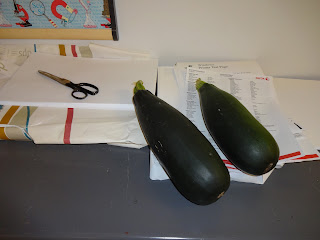
Gardens start out with good intentions, but painfully don't meet even meager intentions. More often, the most anticipated fare is coaxed into producing only a few delectable morsels while the general haul is filled with far too much of some other edible that begins to take on weed status, crowding all others out.
My 2011 garden was my last really ambitious one. In what can only be described as exceedingly poor planning, I created that garden just outside of the reach of the closest garden hose. I also started many of my plants in peat containers that I failed to heed the directions and rip the bottom off of when planting outside. Between the subsequent poor root growth, questionable clay soil, difficulty watering, incessant invasion by weeds and rabbits, and my general laziness, that 2011 garden produced basically nothing. A big garden seems like a good idea on those cool spring afternoons, but weeding takes on a hateful attitude in July's heat and humidity. That 2011 location just out of reach of the garden hose has now been reenlisted to general lawn duty. Not that the lawn is that much better than the garden, but it doesn't come with the same sense of acute failure every time I look at it. I'm content with the chronic sense of failure that the lawn elicits.
More recently, the flower beds have been reenlisted for garden duty. SO had the great idea to employ landscaping fabric and mulch, also using much sturdier garden stakes that can actually hold up to a tomato plant. Regardless of one's belief in mixing flowers and produce plants, the beds look as good as they ever have.
Three of the four tomato plants are producing well. The small sweet red cherry tomatos are great for drive-by eating. The medium Cherokee Purples have grown to unexpected proportions. The larger Cherokee Purples are overlaiden with green fruit - oddly warped in a way that only heirloom vegetables can be proud of.

I impulsively planted seeds taken from store-bought Kumatos. Only one sprouted, and I discarded the rest only to see that dumping them may have been premature as new sprouts were evident a short time later. Perhaps that was prescient; so far the Kumato plant has happily created copious flowers, but not a single fruit. I am beginning to suspect that Syngenta has played some gene warfare game on Kumatos. And I thought eugenics had been discarded in Europe?
In a fit of depression, the one lone pumpkin plant appears to have committed suicide. Sad to see life cut so short when it had so much more to live for.

Someone's garden cucumbers showed up at work last week. I've never understood why "burpless" cucumbers were marketed until I ate one of those gratis cucumbers over the next few days. Yes it was tasty ... the first time. Since they sell burpless varieties, I'm now searching for where the burps go. There must be a cucumber variety sold as super burpy - there is a market, however niche, for everything!

I have contemplated in the past bringing a durian in to work and placing it at the food location. It would be interesting to see the reaction of those who know what it is, as they recoil in horror and wonder where it came from, compared to those who have never been exposed to it and wonder what to do with it. Cutting into it at work may result in new rules for office-appropriate food.
Summer will soon give way to fall and more overripe vegetables that seem to whither and rot within the time span of a work day. November 1 will eventually arrive, when leftover Halloween candy pushes away anything healthy and green in the office food spot. The candy disappears quickly. Except those few hard candies with partially open wrappers or broken lemon suckers, which seem to linger until they are mercifully discarded.
Every place I've worked at in my adult life has collection spots where food converges. Often this is leftover food from meetings, with clear indications of what people do not like. But this time of year, vegetables start to sprout up that were brought in from home.

Gardens start out with good intentions, but painfully don't meet even meager intentions. More often, the most anticipated fare is coaxed into producing only a few delectable morsels while the general haul is filled with far too much of some other edible that begins to take on weed status, crowding all others out.
"Seed catalogs are responsible for more unfulfilled fantasies than Enron and Playboy combined." - Michael Perry
Someday nobody will remember what an Enron is and will have to read on Wikipedia to be reminded.My 2011 garden was my last really ambitious one. In what can only be described as exceedingly poor planning, I created that garden just outside of the reach of the closest garden hose. I also started many of my plants in peat containers that I failed to heed the directions and rip the bottom off of when planting outside. Between the subsequent poor root growth, questionable clay soil, difficulty watering, incessant invasion by weeds and rabbits, and my general laziness, that 2011 garden produced basically nothing. A big garden seems like a good idea on those cool spring afternoons, but weeding takes on a hateful attitude in July's heat and humidity. That 2011 location just out of reach of the garden hose has now been reenlisted to general lawn duty. Not that the lawn is that much better than the garden, but it doesn't come with the same sense of acute failure every time I look at it. I'm content with the chronic sense of failure that the lawn elicits.
More recently, the flower beds have been reenlisted for garden duty. SO had the great idea to employ landscaping fabric and mulch, also using much sturdier garden stakes that can actually hold up to a tomato plant. Regardless of one's belief in mixing flowers and produce plants, the beds look as good as they ever have.
Three of the four tomato plants are producing well. The small sweet red cherry tomatos are great for drive-by eating. The medium Cherokee Purples have grown to unexpected proportions. The larger Cherokee Purples are overlaiden with green fruit - oddly warped in a way that only heirloom vegetables can be proud of.

I impulsively planted seeds taken from store-bought Kumatos. Only one sprouted, and I discarded the rest only to see that dumping them may have been premature as new sprouts were evident a short time later. Perhaps that was prescient; so far the Kumato plant has happily created copious flowers, but not a single fruit. I am beginning to suspect that Syngenta has played some gene warfare game on Kumatos. And I thought eugenics had been discarded in Europe?
In a fit of depression, the one lone pumpkin plant appears to have committed suicide. Sad to see life cut so short when it had so much more to live for.

Someone's garden cucumbers showed up at work last week. I've never understood why "burpless" cucumbers were marketed until I ate one of those gratis cucumbers over the next few days. Yes it was tasty ... the first time. Since they sell burpless varieties, I'm now searching for where the burps go. There must be a cucumber variety sold as super burpy - there is a market, however niche, for everything!

I have contemplated in the past bringing a durian in to work and placing it at the food location. It would be interesting to see the reaction of those who know what it is, as they recoil in horror and wonder where it came from, compared to those who have never been exposed to it and wonder what to do with it. Cutting into it at work may result in new rules for office-appropriate food.
Summer will soon give way to fall and more overripe vegetables that seem to whither and rot within the time span of a work day. November 1 will eventually arrive, when leftover Halloween candy pushes away anything healthy and green in the office food spot. The candy disappears quickly. Except those few hard candies with partially open wrappers or broken lemon suckers, which seem to linger until they are mercifully discarded.
Saturday, May 14, 2016
The Terminator Is Talking on the Phone
I'm in a job transition right now, working 50% of the time in two separate locations. Nobody bothered to get me a phone at my new location, and I hope nobody notices so that I don't have to get one.
I HATE THE TELEPHONE!

I know I'm not alone in this. It is a characteristic of many people on the introverted side of the bell curve. When I see people sauntering down the sidewalk yakking on the phone, or driving down the interstate doing the same, I'm almost baffled by this. I would actually find it more understandable to see a person lick road kill off of the road, as that has about on the same level of revulsion as chit-chat on the phone.
Maybe that is a slight exaggeration; there are times at work where a 5 minute conversation can take the place of awful email chains or long-winded instant messages. But that is often just making up for incompetence. The only thing that is worse than a phone call is a conference call as it amplifies the negatives of telephone conversation. The awkward pauses. The repeated attempts for multiple people to start talking at once. The reality of the best interrupter being the most prominent, sometimes only, voice on the phone.
Part of my distaste for phone conversations is that it does not allow for thinking before speaking, and the world already has entirely too much talking without thinking. The phone takes away facial and body cues that are so important to real communication. Video telephony somehow makes this worse, not better. I think this is because there is still latency in the speech, and the video and audio are always slightly asynchronous.
Even worse than the phone conversation is talking to a fucking computer on the phone. I understand the automated call menus. Humans are expensive and automating the route to (hopefully) the right place makes sense. I'm not sure why I have to answer the same questions if I do finally end up with a human on the other end of the phone, yet I'll accept that. But ... and this is a big But ... while I'm perfectly happy to interact with the computer on the other end by pressing touch-tone buttons, my skin crawls when I must speak to the computer on the other end. It is creepy. It is dehumanizing in an Orwellian way. It is A Brave New World's baby in a jar. If I could find a way, I would get these automated systems to talk to each other in an endless loop so as not to be subjected to them. One of the reasons I was exceedingly happy to dump DirecTV was that the only way to get help that was not available online was by starting the phone call talking to a DirecTV computer; there was no button pushing option. Please, just give me the road kill to lick.
If the promise of artificial intelligence is heading in the direction of more speaking to computers, sign me up for a shack in the middle of nowhere in Montana. Some time ago I was in a casino and saw one of those automated and full-body animated blackjack systems. I watched it for a few minutes as the Barbie-esque cartoon character stood there forlornly with no one to deal to. Her come-hither look and repetitive animated gestures promised the dystopian future that was imagined by every 1980s action movie. We have arrived and the Terminator is a here - she is conquering the world, apparently gamblers first.

I recognize some people hate email, but at least it allows for thought before communicating. Once I de-emoticonned my life, I realized the few extra minutes it takes to write clearly and succinctly is time well spent.
Text messages and Instant Messaging are great for informal conversations or short information.
But at some point the reality will have to be addressed, when did all these supposed advances in communication technology begin to take away what they tried to deliver?
I HATE THE TELEPHONE!

I know I'm not alone in this. It is a characteristic of many people on the introverted side of the bell curve. When I see people sauntering down the sidewalk yakking on the phone, or driving down the interstate doing the same, I'm almost baffled by this. I would actually find it more understandable to see a person lick road kill off of the road, as that has about on the same level of revulsion as chit-chat on the phone.
Maybe that is a slight exaggeration; there are times at work where a 5 minute conversation can take the place of awful email chains or long-winded instant messages. But that is often just making up for incompetence. The only thing that is worse than a phone call is a conference call as it amplifies the negatives of telephone conversation. The awkward pauses. The repeated attempts for multiple people to start talking at once. The reality of the best interrupter being the most prominent, sometimes only, voice on the phone.
Part of my distaste for phone conversations is that it does not allow for thinking before speaking, and the world already has entirely too much talking without thinking. The phone takes away facial and body cues that are so important to real communication. Video telephony somehow makes this worse, not better. I think this is because there is still latency in the speech, and the video and audio are always slightly asynchronous.
Even worse than the phone conversation is talking to a fucking computer on the phone. I understand the automated call menus. Humans are expensive and automating the route to (hopefully) the right place makes sense. I'm not sure why I have to answer the same questions if I do finally end up with a human on the other end of the phone, yet I'll accept that. But ... and this is a big But ... while I'm perfectly happy to interact with the computer on the other end by pressing touch-tone buttons, my skin crawls when I must speak to the computer on the other end. It is creepy. It is dehumanizing in an Orwellian way. It is A Brave New World's baby in a jar. If I could find a way, I would get these automated systems to talk to each other in an endless loop so as not to be subjected to them. One of the reasons I was exceedingly happy to dump DirecTV was that the only way to get help that was not available online was by starting the phone call talking to a DirecTV computer; there was no button pushing option. Please, just give me the road kill to lick.
If the promise of artificial intelligence is heading in the direction of more speaking to computers, sign me up for a shack in the middle of nowhere in Montana. Some time ago I was in a casino and saw one of those automated and full-body animated blackjack systems. I watched it for a few minutes as the Barbie-esque cartoon character stood there forlornly with no one to deal to. Her come-hither look and repetitive animated gestures promised the dystopian future that was imagined by every 1980s action movie. We have arrived and the Terminator is a here - she is conquering the world, apparently gamblers first.

I recognize some people hate email, but at least it allows for thought before communicating. Once I de-emoticonned my life, I realized the few extra minutes it takes to write clearly and succinctly is time well spent.
Text messages and Instant Messaging are great for informal conversations or short information.
But at some point the reality will have to be addressed, when did all these supposed advances in communication technology begin to take away what they tried to deliver?
Monday, February 15, 2016
Office Detritus: The Things We Leave Behind
This can be a brutal time of the year accompanied by major funk brought on by cold winter days, the monotonous cycle of work-eat-sleep-repeat and little good to look forward to.
This funk may grow again this year, but I am hopeful it won't as I have three things going for me.
First, winter hasn't been too heinously bad. This weekend is cold on a nearly intolerable level, but we've had a couple really nice weekends recently allowing bicycle riding and even some grilling.
Second, I have a trip coming up. Not only does this give me something to look forward to, but the thinking and planning (an integrally fun part of the trip) allows for something to break up the monotony.
Third, I am in transition to a new job at work. While I won't get too jazzed up about work, the change allows for some corporate repletion, even if it ends up being bleakly short.
This transition just sort of happened. At first I wasn't too sure about it, but now that I'm two weeks into a five month transition, I'm realizing that I'm quite ready for new problems.
My work transition has me working out of two offices, or rather, my old office and new cubicle (damn, it feels good to be a gangsta). As I sat in my new cubicle on one of my first days in the new job, I opened all my desk drawers. As usual, the previous denizen had done a reasonably good job of cleaning it out, but there was still some flotsam and jetsam.
The previous occupant must have been very paper oriented as there was no shortage of folders and folder tabs. These will end up in the shred barrel soon enough, but there were much more interesting things:


This funk may grow again this year, but I am hopeful it won't as I have three things going for me.
First, winter hasn't been too heinously bad. This weekend is cold on a nearly intolerable level, but we've had a couple really nice weekends recently allowing bicycle riding and even some grilling.
Second, I have a trip coming up. Not only does this give me something to look forward to, but the thinking and planning (an integrally fun part of the trip) allows for something to break up the monotony.
Third, I am in transition to a new job at work. While I won't get too jazzed up about work, the change allows for some corporate repletion, even if it ends up being bleakly short.
This transition just sort of happened. At first I wasn't too sure about it, but now that I'm two weeks into a five month transition, I'm realizing that I'm quite ready for new problems.
My work transition has me working out of two offices, or rather, my old office and new cubicle (damn, it feels good to be a gangsta). As I sat in my new cubicle on one of my first days in the new job, I opened all my desk drawers. As usual, the previous denizen had done a reasonably good job of cleaning it out, but there was still some flotsam and jetsam.
The previous occupant must have been very paper oriented as there was no shortage of folders and folder tabs. These will end up in the shred barrel soon enough, but there were much more interesting things:
- Five pairs of scissors. Why did "Rod" have a need for not one, two or even four pairs of scissors, but five? I can only hope that they are remnants of past employment civilizations. I'll keep one of these and the rest will be discarded.
- Two telephone headsets. Why did "Rod" need not one, but two telephone headsets? This is a standard office cubicle where talking on the phone with any degree of decorum is difficult, so one phone is a stretch. Two headsets looks like a problem. Reusing these feels almost as gross as rewearing someone else's pants, and they'll likely end up in the landfill (sorry future generations).
- Six opened boxes of staples. I'm quite sure all the staples that the world will ever need have already been manufactured. Every work location I've every moved into has at least a partial box or two of staples. But six? I guess I'll keep these, future archaeologists will assume these are some type of office idolatry and I must be in a very sacred place. Oddly, there was no stapler.
- A vast assortment of pens and highlighters. I kept a couple felt tip pens and sharpies. I have no affection for highlighters and am partial to gel ink pens. "Off with their heads!" says the Red Queen to the rest of the writing paraphernalia.
- A powered USB port. I've never needed one of these at work, but I guess I could someday. I'll stick it in the drawer likely to be discarded later in office life.
- Various other sundries: pennies (keep), paper clips (in the stables camp), toothpicks (um, really gross), rubber bands (keep, but discard when they start to deteriorate), screws taped together (cubicle must be missing some critical hardware somewhere), and other things that I, frankly, have no idea what they are...
- The most curious thing though has to be this Plantronics device. I'm really not sure what it is, but I strongly suspect it has been supplanted by cell phones long, long ago. My suspicion is that since this was probably really expensive initially, "Rod" must have been unable to appropriately discard it when he left the cubicle even though it now has negative residual value. Curiously, I have not thrown this away either, yet...

I shouldn't and won't beat up "Rod" too much. I've never met the guy and probably never will. But I also know that once my job transition is complete and it comes time to vacate my old office, I will probably leave a few parting gifts to a future generation of subterranean office dwellers.
I guess the only question will be: What do I do with my partial boxes of staples; do I begin breaking the generational cycle of office detritus?

Subscribe to:
Posts (Atom)